Wind energy has become one of the key drivers of the energy transition. However, behind every wind farm lies a first-class logistical and technical process, where crane companies play an essential role. In this article, we explore the role of cranes in wind turbine installation and the added value provided by the lifting sector.
Types of wind turbine towers
The type of tower is a critical factor when selecting the right crane for installation. These towers are true vertical structures that can exceed 100 meters in height. Today, the three main types of towers are:
- Steel tubular towers: The most common design. Made from conical steel sections welded together, they are assembled in the workshop and transported in modules.
- Concrete towers: These require partial assembly on site or at the factory, using prefabricated segments that fit together like a giant construction set.
- Hybrid towers: Combining a concrete base with a steel upper section, these allow greater heights while optimizing cost.
Due to their size and weight, transporting these components requires specialized transport solutions, typically by road, although trains or barges are used in some cases.
Transporting the wind turbine to the wind farm
Wind turbines are transported in separate components (towers, blades, nacelles, etc.), creating a significant logistical challenge. Transport convoys must coordinate special permits, alternative routes and often require police escorts and support vehicles. During the journey, small support cranes and specialized vehicles assist with loading and unloading operations, especially in complex sections.
Installation of wind turbines on site
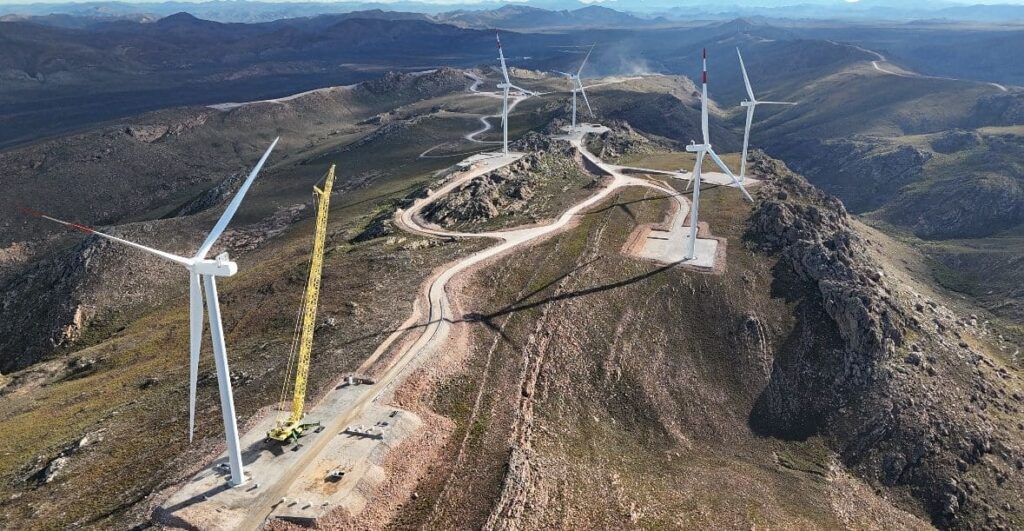
Once at the wind farm, the true challenge begins. The assembly of a wind turbine is a precise process where safety and efficiency are paramount. It starts with site preparation and foundation work, after which cranes take center stage:
1. Support cranes
Small and medium cranes, ranging from 40 to 150 tonnes, handle auxiliary tasks: unloading components, preparing materials and installing the first tower sections.
2. Main cranes
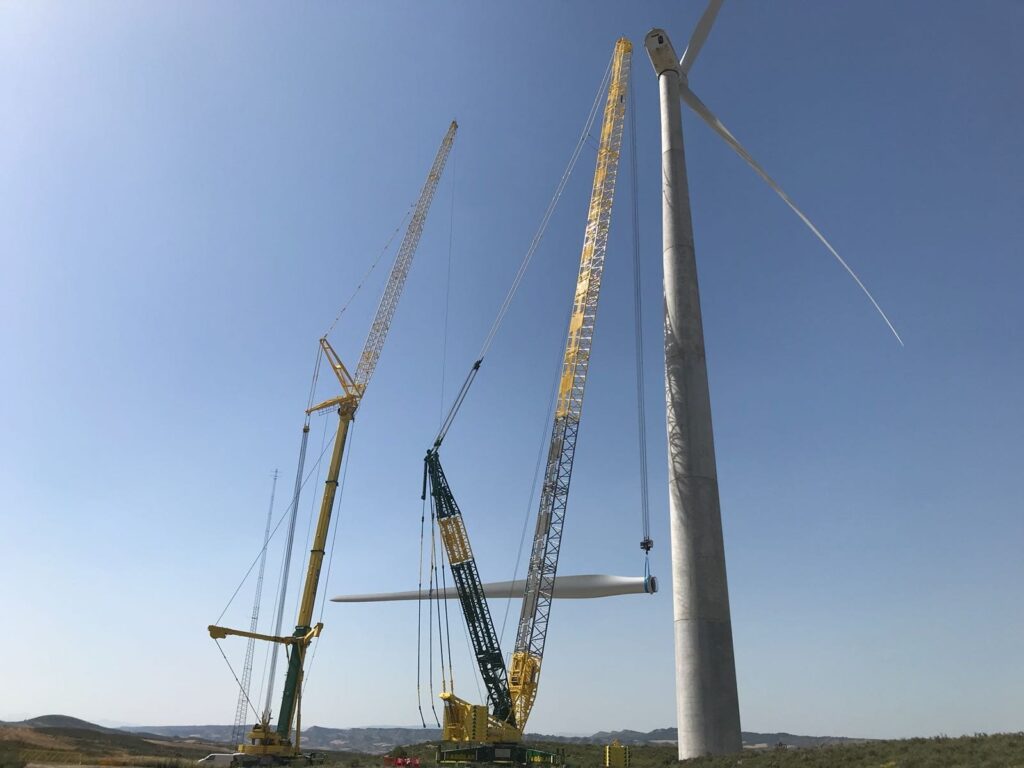
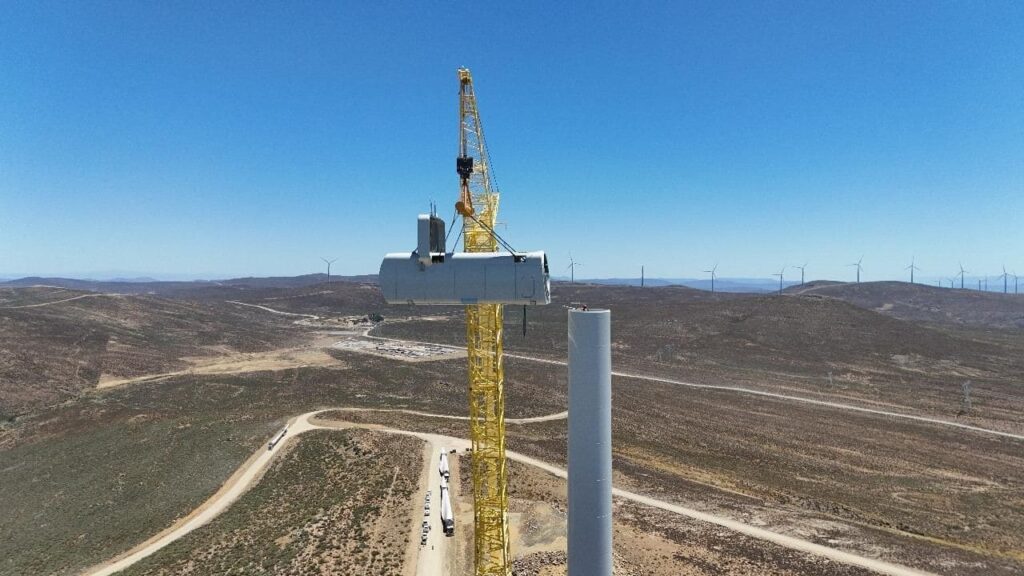
This is where heavy machinery comes into play. Large crawler cranes (LR-type) with capacities from 500 to over 1,500 tonnes are the real stars. Only these machines can lift tower sections weighing up to 100 tonnes and, most importantly, hoist the nacelle and blades over 100 meters high, with maximum precision and often in challenging wind conditions.
3. Final stage
After assembling the tower, the nacelle is mounted, followed by the blades. Lifting operations are critical, not only because of the weight and size of the components, but also due to the need to synchronize crane movements with technicians working at height.
The assembly of a wind turbine requires a well-coordinated, specialized team. Crane companies provide more than just state-of-the-art equipment, they deliver expertise, certified teams and an unwavering commitment to safety.
In conclusion, without cranes, from the smallest to the colossal LR models, wind turbine installation would remain just an ambition. Thanks to the strength and precision of our sector, wind energy is a reality.