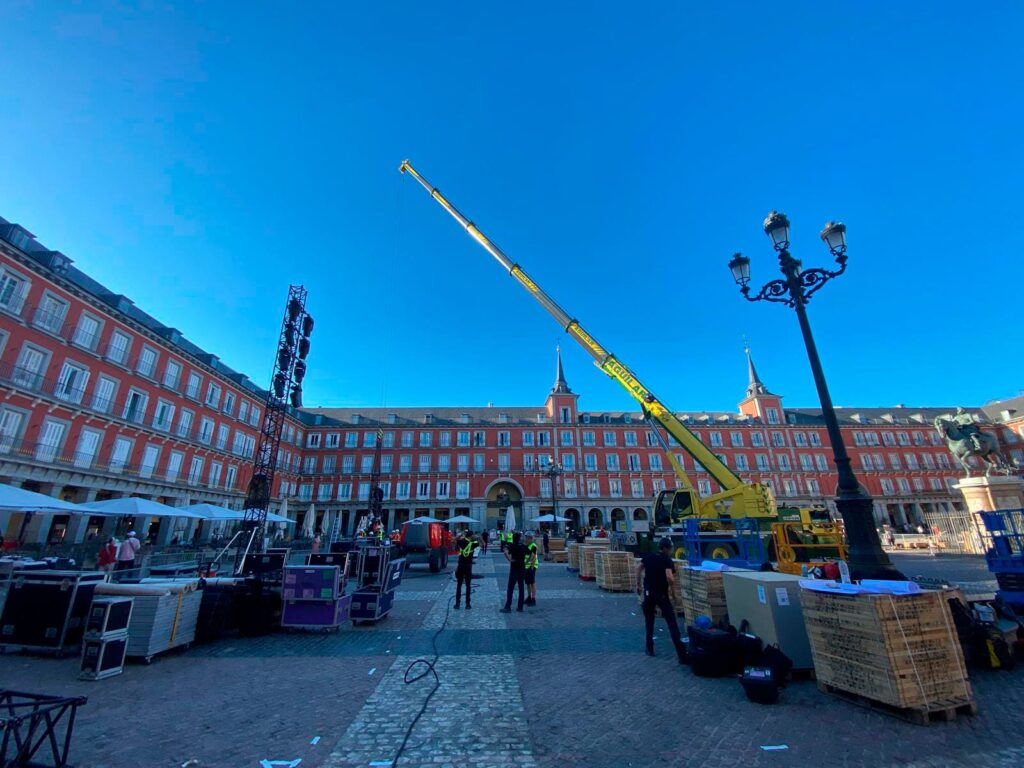
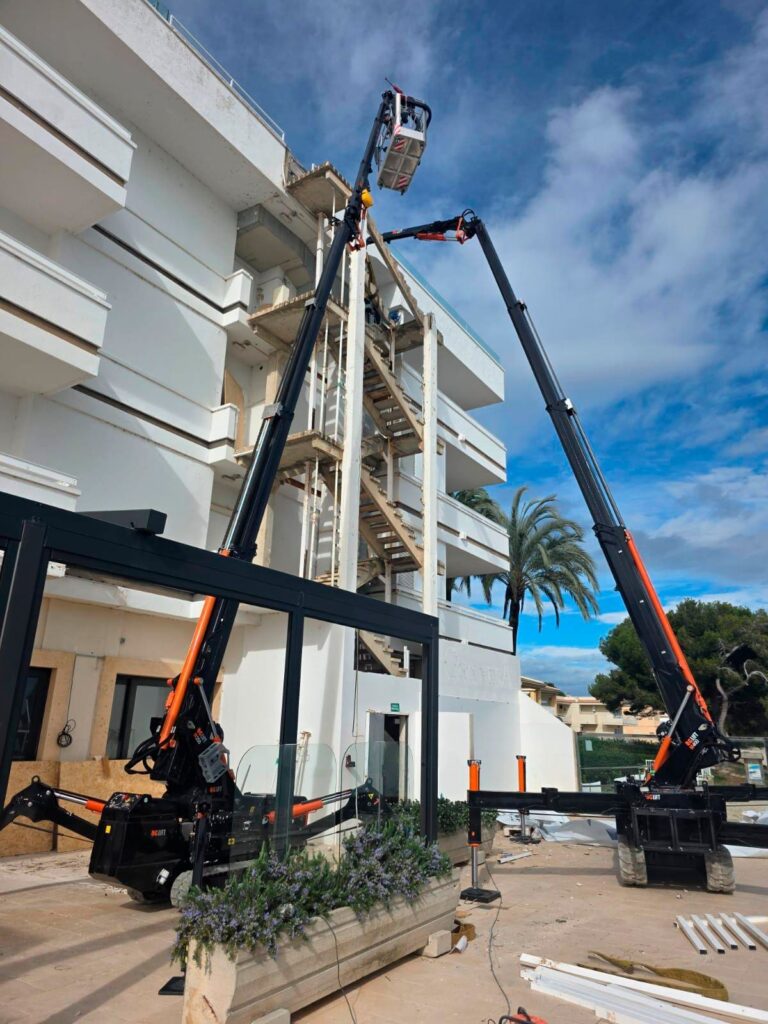
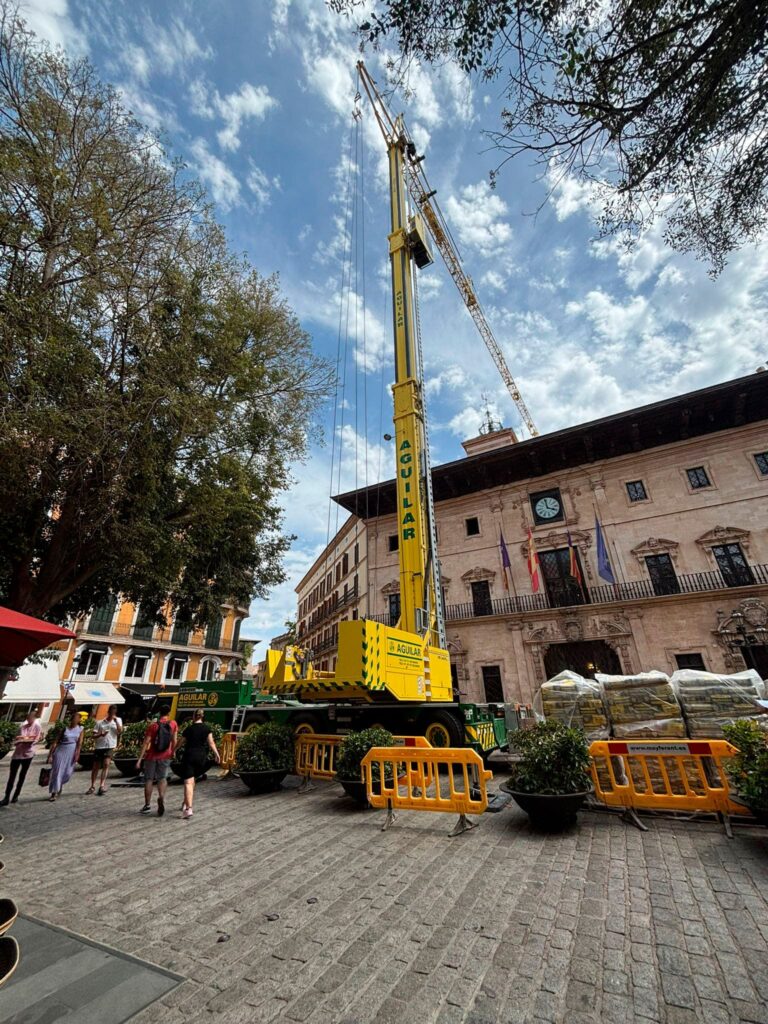
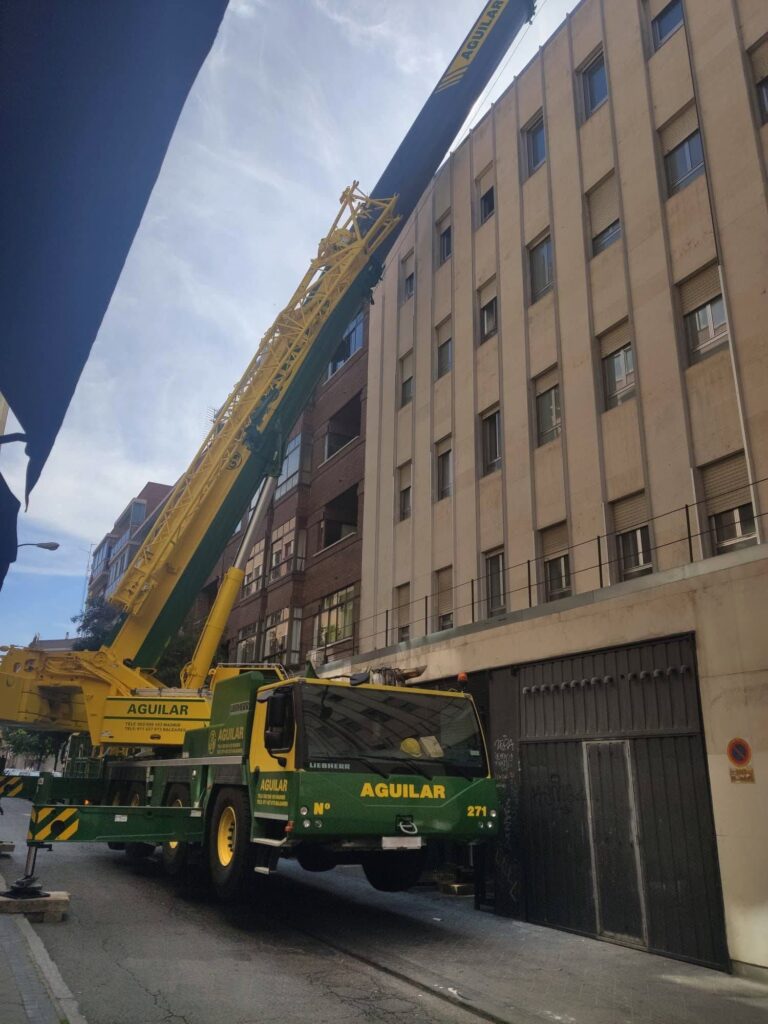
Working in urban environments always presents challenges for construction companies: narrow streets, limited manoeuvring space, strict regulations, and the need to minimise disruption to residents and local businesses. In these situations, mobile cranes have become an essential solution for urban construction projects thanks to their ability to operate in confined spaces without compromising on lifting capacity, efficiency, or safety.
Why use mobile cranes in urban construction?
Unlike larger or fixed lifting equipment, mobile cranes offer the perfect combination of mobility, rapid setup, and lifting performance, making them particularly suitable for urban environments. Some of their key advantages include:
Easy access, even in narrow streets
Mobile cranes can travel on public roads without requiring special transport arrangements. This allows them to access historic city centres, infill construction sites, and pedestrianised areas where other types of heavy equipment may be unable to operate.
Fast setup without permanent structures
Once on site, mobile cranes can be assembled and ready for operation within hours, or even minutes, without the need for foundations or anchoring systems. This saves valuable time and avoids technical complications, which is particularly important on urban projects where efficiency and minimal disruption are essential.
Versatility on site
Mobile cranes can relocate within the same job site without requiring complete dismantling. This flexibility allows them to adapt to different phases of a project while maintaining productivity and reducing downtime.
Reduced impact on public spaces
Because they require less operational space and site preparation, mobile cranes minimise the need for extensive road closures and traffic disruptions, making it easier to work alongside local communities and businesses.
Which type of mobile crane is best suited for urban projects?
The most suitable crane will depend on the nature of the project, the available space, and the loads being handled. Some of the most common options include:
- City cranes: Compact and highly manoeuvrable cranes specifically designed for urban environments. Examples include the Tadano AC City range (such as the AC 3.045-1 City) and the Liebherr LTC Series (such as the LTC 1050-3.1).
- Compact all-terrain cranes: Offering an excellent balance of stability and mobility for projects with challenging access conditions. Examples include smaller models from the Tadano AC range, Liebherr’s LTM series, and Grove all-terrain cranes.
- Mini cranes and spider cranes: Ideal for refurbishment projects, indoor lifting operations, and locations where precision is more important than lifting capacity. Popular manufacturers include UNIC and Maeda.
- Mobile construction cranes and mobile tower cranes: Suitable for projects requiring the benefits of a tower crane while maintaining mobility. Notable examples include the Liebherr MK Series and the Spierings SK-AT range.
- High-capacity all-terrain cranes: Although these cranes require more extensive logistics planning, they still provide the advantage of self-propelled road travel along with efficient assembly and dismantling processes.
Mobile cranes are a practical, safe, and highly efficient solution for urban construction. Their easy access, rapid deployment, and adaptability make them the perfect choice when working in restricted spaces where precision, productivity, and reliability are essential.At Grúas Aguilar, we help you find the ideal mobile crane for your urban construction project, ensuring the right equipment for every lifting challenge.