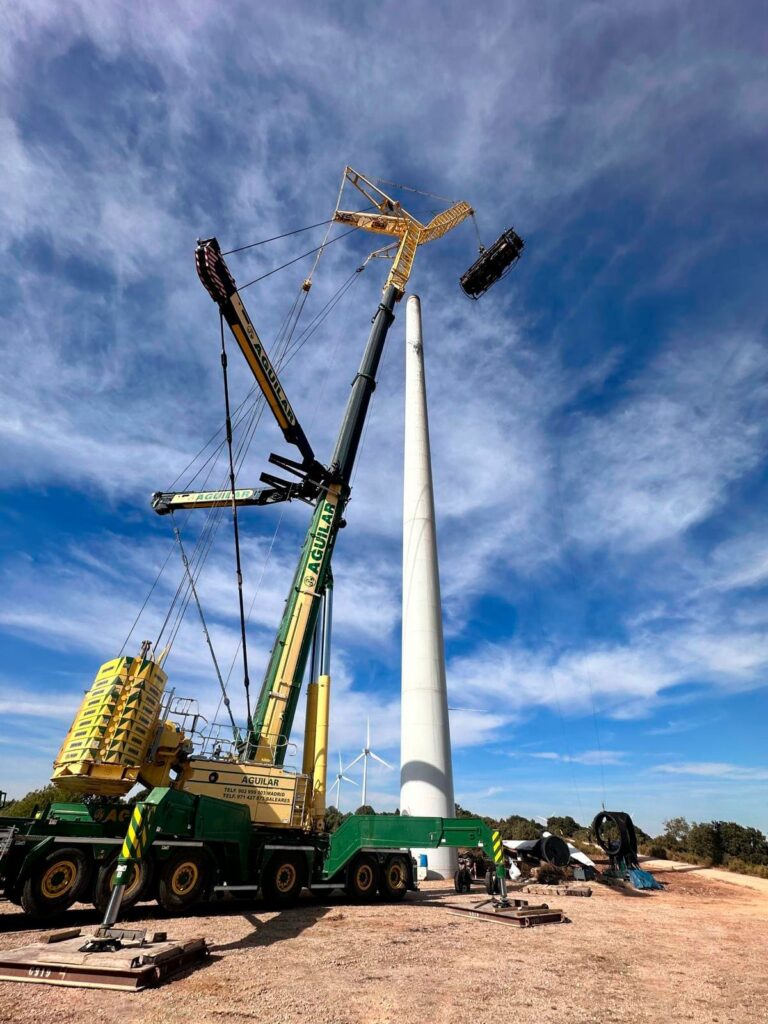
Wind energy has become one of the world’s leading sources of clean and sustainable power. Behind the success of wind farms lies a robust infrastructure, where cranes for the wind energy industry play a crucial role. In this article, we explore why these cranes are essential to renewable energy projects, the different types available, their key features, and how they contribute to the continued growth of the renewable energy sector.
Why are cranes essential in the wind energy industry?
The construction, installation, and maintenance of wind turbines require specialized equipment due to the size, weight, and height of their components. Cranes used in the wind energy industry make it possible to:
- Lift towers and nacelles with precision and safety.
- Handle large wind turbine blades without risk of damage.
- Facilitate maintenance operations in remote or hard-to-access locations.
Without these cranes, the logistics and operation of wind farms would be significantly slower, more expensive, and less safe.
Types of cranes used in the wind energy industry
1. Crawler cranes
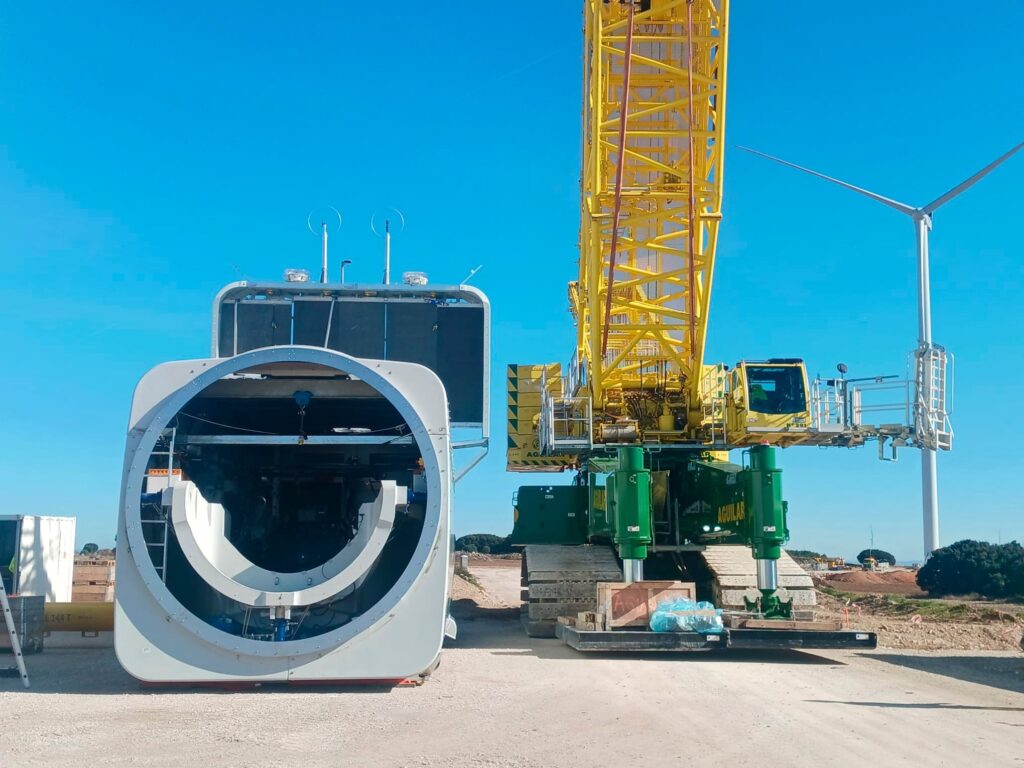
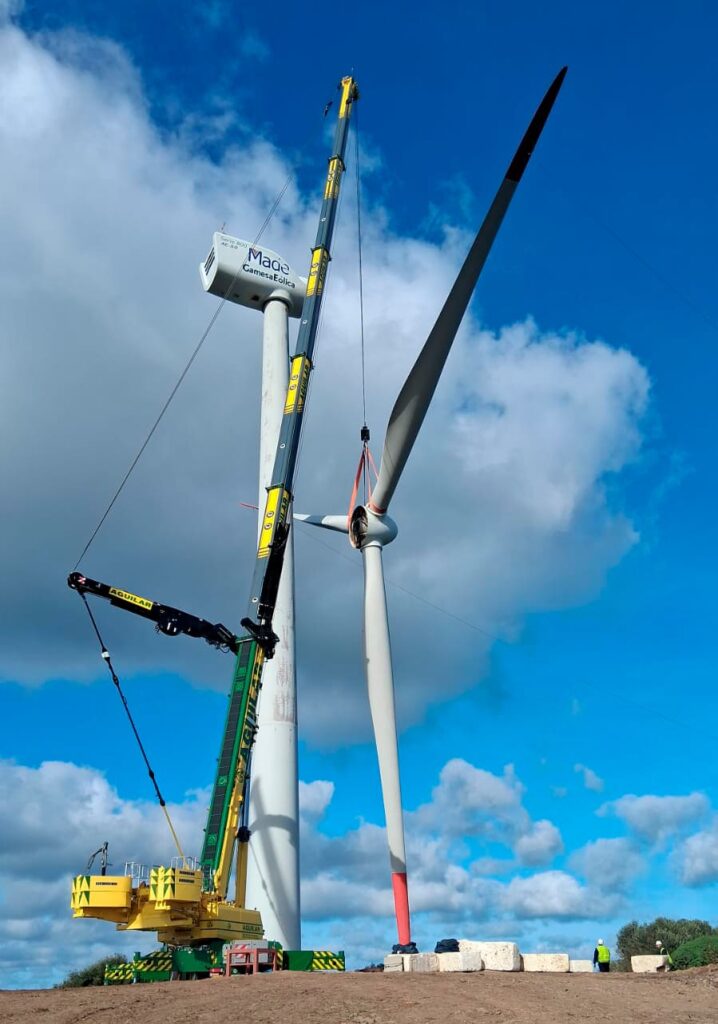
Crawler cranes are the most commonly used cranes in the wind energy sector due to their high lifting capacity and excellent stability on uneven terrain. In many cases, they can move around a wind farm with components attached or without being fully dismantled. They are ideal for lifting heavy and oversized components such as nacelles and turbine blades.
2. Telescopic cranes
Telescopic cranes offer greater mobility and versatility, although they generally provide lower lifting capacities and reach compared to crawler cranes. They are mainly used for maintenance operations and work at height.
3. Blade handling cranes and specialized systems
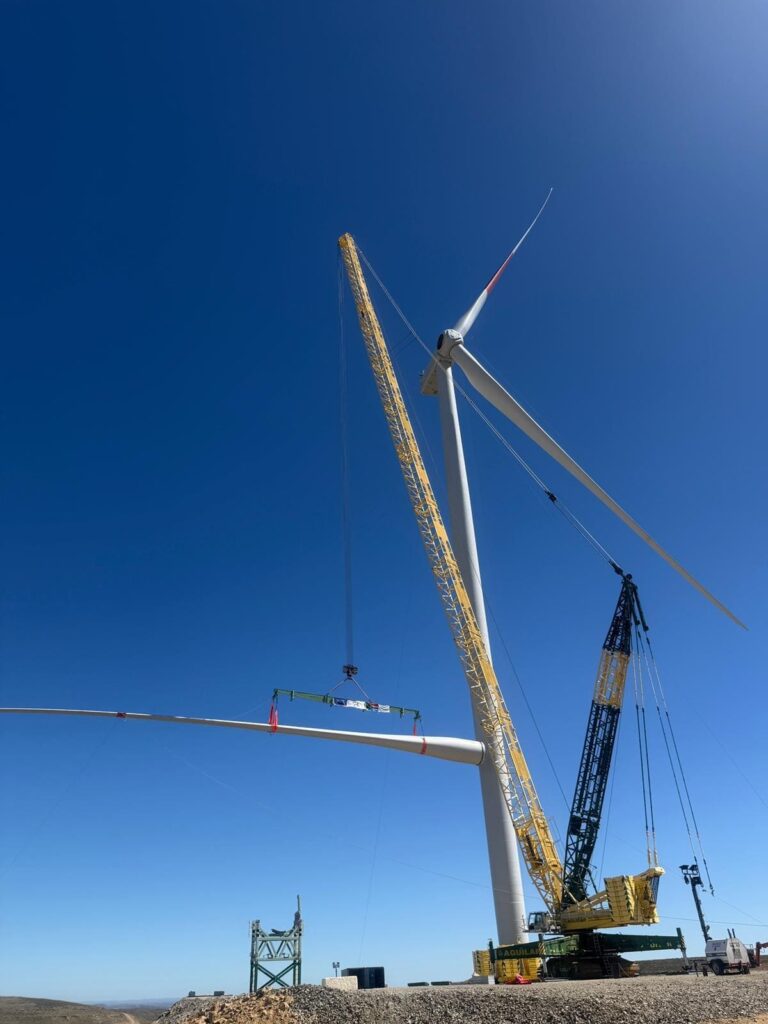
Some manufacturers have developed cranes with dedicated systems for handling wind turbine blades, which can exceed 50 metres in length. These solutions help ensure the integrity of the blades during installation. In addition, specialized lifting attachments are available, enabling virtually any crane to handle blades safely and efficiently.
Key features of cranes for the wind energy industry
- High lifting capacity: Capable of lifting hundreds of tonnes.
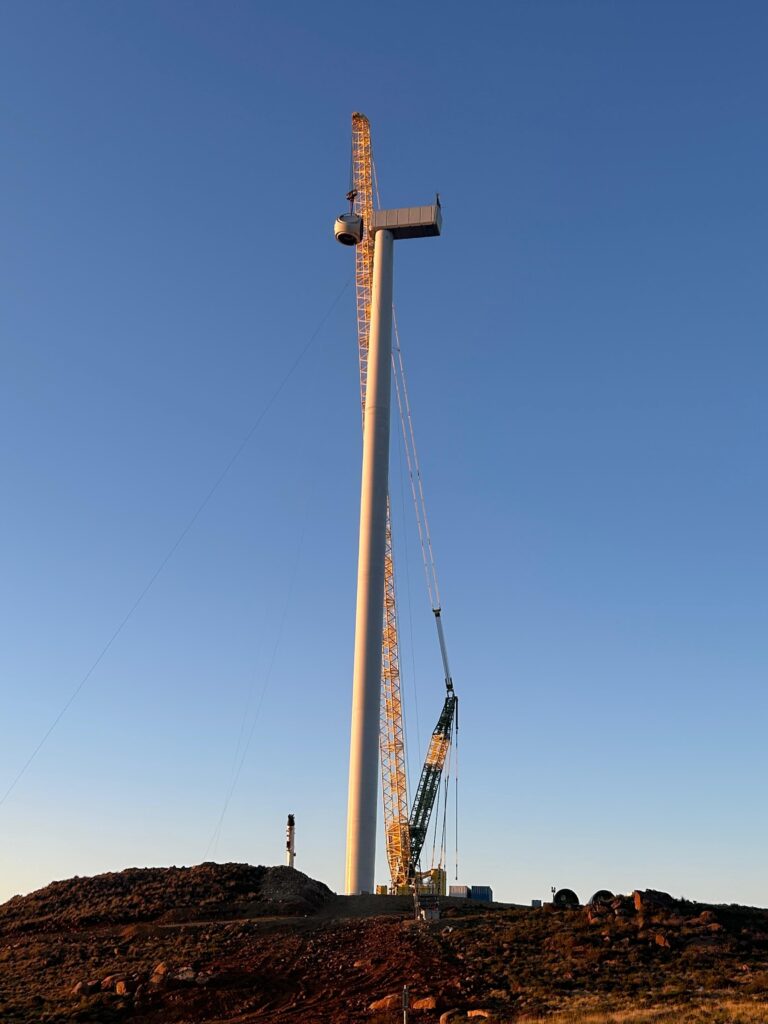
- Exceptional reach and height: Required to access the highest sections of modern wind turbines. Some turbines can reach total heights of up to 250 metres, including the tower and the blade at its highest point.
- Stability and safety: Essential for operations on uneven terrain and in changing weather conditions.
- Ease of transport and mobility: Cranes often need to move efficiently between turbine locations and throughout the wind farm.
Trends in wind farm cranes
As wind turbines continue to increase in size and power output to capture stronger and more consistent winds, cranes for the wind energy industry are evolving towards more powerful and efficient models. At the same time, the integration of digital technologies for real-time monitoring and predictive maintenance is improving both safety and productivity.
Cranes for the wind energy industry are key assets in renewable energy projects and play an indispensable role in the sustainable and efficient development of wind power. Their proper use ensures the safe, efficient, and long-lasting installation of wind turbines, supporting the growth of a sector that is vital to the future of global energy.
If your company is involved in the construction or maintenance of wind farms, having the right lifting equipment can make a significant difference to the quality, efficiency, and safety of your projects. At Grúas Aguilar, we have a dedicated division specialising in the installation, maintenance, and dismantling of wind farms, always providing the most suitable equipment for each project.